
%402x.svg)
Recognition in tourism markets rarely happens all at once.
More often, growth begins quietly through movement, changing travel patterns, and gradual shifts in where people choose to spend their time. Long before a destination becomes fully visible internationally, the underlying signals are usually already there.
Indonesia’s tourism sector in early 2026 offers one of those signals.
According to data released by Indonesia’s Central Statistics Agency (BPS), international tourist arrivals reached 1.09 million in March 2026, representing a 10.5% increase compared to the same period last year. Between January and March 2026, total international arrivals reached 3.44 million visitors, up 8.62% year-on-year.
At a surface level, the numbers reflect continued recovery.
But beneath that, they suggest something more structural: tourism across Indonesia is beginning to deepen rather than simply rebound.
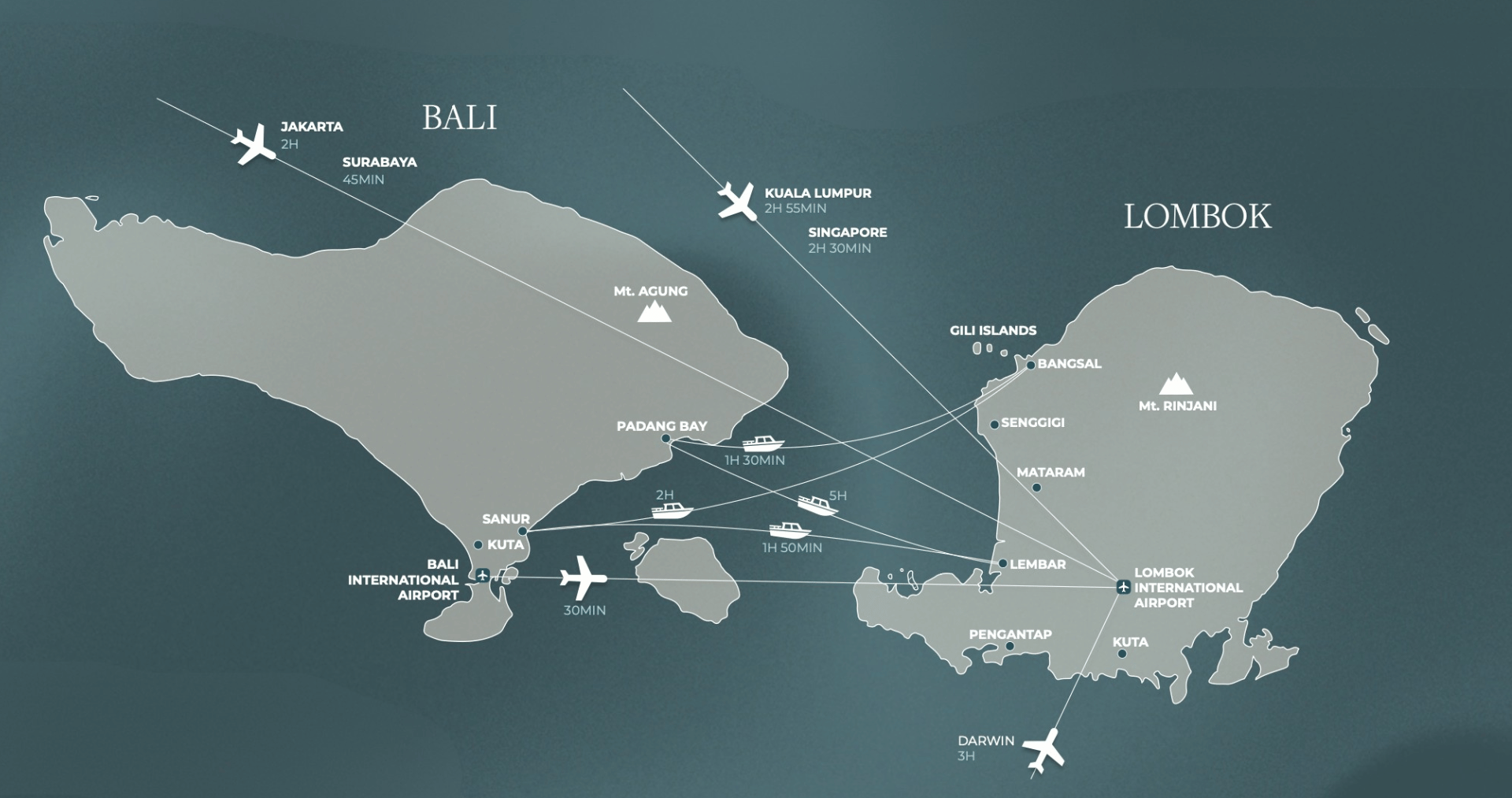
Read More: Lombok Property Investment: A Market Entering Its Own Cycle
Growth Beyond Volume
The most interesting part of the latest BPS data is not necessarily the increase in visitor numbers themselves.
It is how visitors are travelling.
International tourists in the first quarter of 2026 spent an average of US$1,345 per trip, while average stays extended to nearly 11 nights. This points toward a different type of travel behaviour than the rapid, high-turnover tourism patterns that previously defined much of Southeast Asia.
Travellers are staying longer. Moving slower. Choosing destinations differently.
Increasingly, the appeal is shifting toward places that still offer space, balance, and a stronger connection to landscape and local identity.
That shift matters for Lombok.
.png)
Why Lombok Sits in a Different Position
For years, Bali absorbed the majority of Indonesia’s international attention. It became the centre of regional tourism growth, supported by mature infrastructure, global visibility, and an already established hospitality ecosystem.
Lombok developed differently.
Its growth has been quieter, more gradual, and less dependent on large-scale exposure. Even as tourism across Indonesia expands, Lombok remains earlier in its development cycle, particularly across the southern coastline and emerging areas surrounding Kuta and the Mandalika region.
This creates a different kind of positioning.
The island is already benefiting from broader tourism momentum, but it has not yet reached the same level of saturation seen in more mature destinations. Infrastructure continues to improve. Hospitality development remains active. International access is expanding progressively rather than all at once.
In many ways, Lombok sits between visibility and maturity.
And that stage is often where long-term positioning becomes most relevant.
.png)
Domestic Tourism Matters More Than People Think
Alongside international arrivals, domestic tourism across Indonesia has also accelerated sharply.
BPS reported more than 126 million domestic tourist trips in March 2026 alone, representing a 42.1% increase compared to the previous year. Cumulatively, domestic travel reached over 319 million trips during the first quarter.
While seasonal holidays contributed to the increase, the broader implication is more important.
Domestic tourism creates stability.
In emerging destinations, local and regional travel often establish the foundation before international demand scales further. It supports hospitality occupancy, operational continuity, and year-round activity without relying entirely on overseas markets.
For Lombok, this matters considerably.
One of the island’s advantages is that it is no longer dependent on a single source of tourism demand. Domestic travellers, regional visitors from neighbouring Southeast Asian countries, and longer-stay international travellers are all beginning to contribute to the market simultaneously.
That diversification reduces volatility and supports more sustainable long-term growth.
.png)
The Importance of Direction
Tourism markets rarely move in a straight line.
Infrastructure develops gradually. Flight connectivity expands incrementally. Awareness builds over time. Recognition tends to arrive later.
What matters most is not whether every element is already complete, but whether the overall direction is becoming clearer.
In Lombok, the direction increasingly is.
Over the past several years, the island has seen continued infrastructure investment, expanding hospitality development, improved international access, and rising visibility across regional travel markets. At the same time, much of Lombok still retains what many mature destinations have gradually lost: openness, available land, and a pace of development that remains relatively balanced.
That combination is becoming increasingly rare across Southeast Asia.
.png)
Tourism and Property Markets Tend to Move Together
In emerging destinations, tourism growth and real estate positioning are rarely separate conversations.
Longer visitor stays, improving accessibility, and expanding hospitality activity gradually influence how destinations are perceived. Over time, this shapes demand not only for hotels and resorts, but also for villas, branded residences, and lifestyle-oriented developments.
Importantly, these shifts usually happen progressively before they become fully reflected in pricing.
For investors observing Lombok closely, the relevance of Indonesia’s tourism growth is not simply about higher arrival numbers. It is about what those numbers suggest regarding movement, attention, and long-term market confidence.
The island is becoming more integrated into regional travel patterns while still remaining relatively early compared to more established destinations nearby.
That distinction matters.
Because once a market becomes completely obvious, much of its repositioning has already occurred.
.png)
Looking Ahead
Indonesia’s tourism sector in 2026 reflects more than short-term momentum.
It reflects changing travel behaviour across the region, broader diversification beyond traditional tourism centres, and growing interest in destinations that still offer a different pace and experience.
For Lombok, these shifts are arriving at a particularly important stage.
The island is becoming more visible internationally while still remaining in the earlier phases of its development curve. Infrastructure is improving. Connectivity continues to expand. Recognition is growing gradually rather than suddenly.
And in emerging markets, that type of growth often proves more durable over time.
The significance of the latest tourism data is not simply that more people are visiting Indonesia.
It is that the movement behind those numbers increasingly points toward where the next phase of regional growth may quietly be forming.


%402x%20(dark).svg)
%402x%20(dark).svg)

%402x.svg)


