
%402x.svg)
Along Indonesia’s southern islands, comparisons tend to appear early.
For decades, Bali has shaped the reference point for tourism, lifestyle, and property investment. Its trajectory is well documented, moving from a relatively quiet destination into one of the most recognised global markets in the region. When attention begins to shift elsewhere, it is almost instinctive to measure that shift against Bali’s past.
In the case of Lombok, that comparison appears frequently. It is also, in many ways, incomplete.
Because Lombok is not retracing the same path. It is entering a different phase of development, defined less by acceleration and more by timing.
Read More: GT World Challenge Asia 2026 Returns to Mandalika
A Market That Moves Without Urgency
Lombok does not move with the same visibility.
It is not a market that builds momentum through constant exposure or rapid cycles of attention. Yet on the ground, movement is evident. Not through sudden expansion, but through gradual accumulation.
Tourism across Indonesia continues to expand, but its distribution is changing. Growth is no longer concentrated within a single destination. It is dispersing into areas that offer a different kind of experience, both for visitors and for those considering a longer presence.
Within this shift, Lombok is beginning to absorb a steady flow. Domestic travel has strengthened, creating a consistent base of activity, while international awareness continues to build at a measured pace.
There is no sense of urgency in this movement.
And that absence is, in itself, informative.
Familiar Conditions, Without the Same Compression
Time spent in Lombok often carries a sense of familiarity, though not in form.
The island does not resemble Bali in its structure or identity. What it reflects instead is a stage of development that is less compressed.
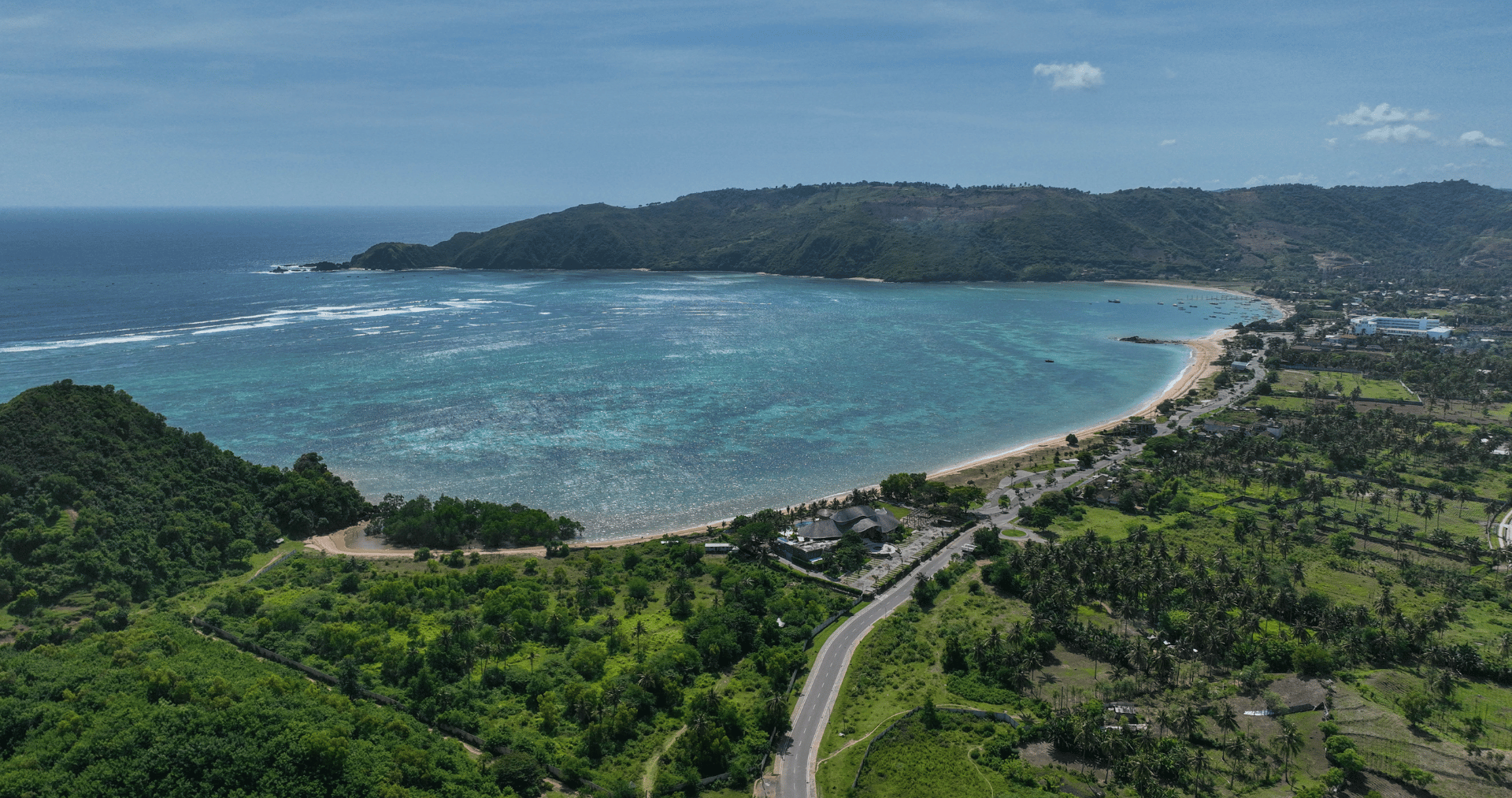
Movement remains fluid. Roads are navigable without strain. Beaches extend without interruption. Along the southern coastline, it is still possible to move through the landscape without encountering density at every point.
From the surf breaks in the south to the slopes of Mount Rinjani, daily life continues to orient itself around natural conditions rather than built environments.
This is not an absence of development. It is the presence of space.
And space, over time, becomes increasingly difficult to reintroduce once it has been lost.
Infrastructure That Exists Ahead of Demand
There is a tendency to describe Lombok as early in its development cycle. While partially accurate, the description often overlooks a key distinction.
The island is not lacking infrastructure.
It is operating with infrastructure that has not yet been fully absorbed by demand.
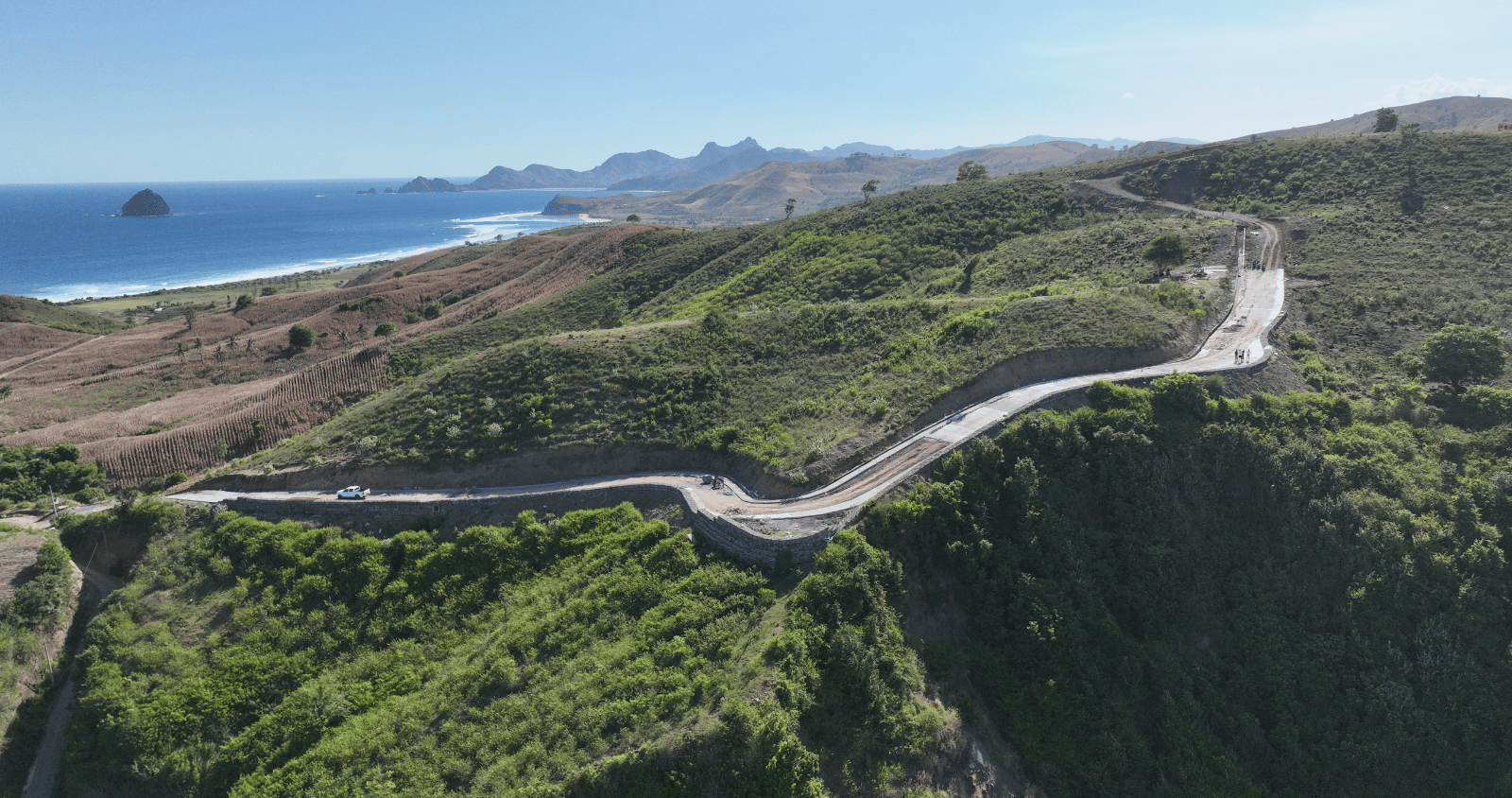
An international airport connects Lombok to major domestic routes. Road networks across key regions function reliably. The Mandalika Special Economic Zone has introduced a structured framework for tourism, supported by large-scale planning and long-term investment.
What is less present is pressure.
In more mature destinations, infrastructure tends to follow growth, often struggling to keep pace. In Lombok, the sequence appears more balanced. Capacity exists before saturation.
This creates a different kind of environment for expansion, one that allows development to occur without immediate friction.
Simplicity as a Structural Advantage
Beyond physical conditions, Lombok carries a different kind of clarity.
The island remains closely connected to its local context. The presence of Sasak communities is not peripheral, but central to how the island functions. Land, culture, and daily life remain interlinked in ways that are increasingly rare in more developed destinations.
For investors and long-term residents, this does not necessarily simplify decisions. But it does remove layers of noise.
There is less speculative overlay. Fewer competing narratives. Fewer signals driven purely by momentum.
In emerging markets, that kind of simplicity is often undervalued at the outset, and only recognised once it becomes more difficult to find.
Space for Multiple Directions of Growth
One of Lombok’s less discussed advantages is its capacity to develop without immediate overlap.
In more established markets, different segments often compete within the same limited geography. In Lombok, there is still room for multiple directions to take shape independently.
Along the southern coastline, low-density residential areas are beginning to form. Planned developments are introducing structured hospitality environments. At the same time, eco-oriented projects are emerging in locations where integration with the landscape remains possible.
These segments are still early. But importantly, they are not in conflict.
Over time, this allows for a more balanced ecosystem, where different forms of use can coexist without compressing each other.
Timing as the Defining Variable
From a property perspective, Lombok is less defined by product and more by timing.
Entry points remain accessible relative to more mature markets. Land availability, particularly in coastal areas, has not yet reached the level of constraint seen elsewhere. Pricing continues to adjust, but not at a pace that reflects full maturity.
Legal structures for foreign participation, including HGB and Hak Pakai, are established and increasingly understood when approached correctly.
But beyond these mechanics, the more relevant factor is positioning.
Tourism demand is building. Occupancy levels are gradually improving. Domestic travel provides a consistent baseline, while international exposure continues to expand.
These are not signals of a market that has already moved.
They are indicators of one that is in transition.
.png)
Connectivity and Its Timing
If there is a limiting factor in Lombok today, it lies in the consistency of international access.
Flight routes exist, but not yet with the frequency or stability of more established destinations. For some, this introduces hesitation.
From another perspective, it reflects timing.
In many comparable markets, infrastructure precedes connectivity. Airports are developed, road networks are established, and planning frameworks are put in place before international access scales.
When connectivity improves, the effect is rarely incremental.
Lombok appears to be positioned just before that shift.
A Market Defined on Its Own Terms
The tendency to frame Lombok as an extension of Bali overlooks what makes it distinct.
This is not a market driven by replication. It is shaped by its current conditions.
Infrastructure exists, but is not under strain. The landscape remains largely intact. Development is present, but not yet dominant. Growth is visible, but not accelerated.
For those looking at the island from a long-term perspective, these factors carry more weight than comparison.
Because value is rarely created at the point of maximum visibility.
It is formed earlier, when a place is still establishing its direction.
A Different Kind of Entry Point
Lombok does not present itself as an obvious opportunity.
It requires a different kind of perspective. One that looks beyond immediate signals and considers how a place may evolve over a longer horizon.
The question is not whether Lombok will follow the trajectory of another destination.
It is whether its current trajectory, quieter, less compressed, and more measured, is precisely what gives it long-term relevance.
And whether that relevance is best understood before it becomes widely agreed upon.


%402x%20(dark).svg)
%402x%20(dark).svg)

%402x.svg)


