
%402x.svg)
How Status Economics Is Redefining Luxury Property Investment in Indonesia
The question comes up in nearly every conversation I have with international property investors: "Why wouldn't I just buy in Kuta where all the action is?"
It's a fair question. Kuta has the restaurants, the beach clubs, the infrastructure. But here's what's happening in luxury real estate that most people miss—and why investors who understand it are quietly acquiring land in places like Pengantap while others chase the crowds.
The Status Paradox Reshaping Luxury Real Estate
David Marx's Status and Culture unpacks something critical for anyone investing in luxury hospitality or residential property: the more visible something becomes, the less status it actually holds.
This isn't about snobbery. It's structured economics.
In hospitality and luxury real estate, status operates through three distinct currencies:
Economic capital – the obvious one. The price tag. The $2,000 hotel suite, the multi-million dollar villa. Marx calls this "vulgar" because while it's easy to acquire, it's hard to command respect with money alone. This is why the 13 Hotel in Macau—all gold-plated opulence—ultimately failed. Price without credibility is just noise.
Cultural capital – knowing what matters before others do. Understanding why a specific terroir matters, why a particular architect's work holds weight, why this beach and not that one.
Social capital – access. The unlisted property. The general manager's personal number. The invitation-only viewing.
The internet collapsed the traditional timeline between when legacy wealth discovered something and when the masses followed. TikTok now broadcasts "the best hidden hotel in Bali" to 4 million people overnight. What was exclusive on Monday is a tourist trap by Friday.
This creates the central paradox: You cannot be truly high-end and viral simultaneously.
Read More: A Return to Fiscal Support in Indonesia’s Residential Property Market
What This Means for Lombok Property Investment
Here's where Lombok—and specifically locations like Pengantap versus Kuta—become fascinating.
Kuta is visible. It's accessible. It's on every "Top 10 Lombok Beaches" listicle. And that visibility is precisely what makes it less attractive to the investors and travelers who drive the highest property values.
The new luxury traveler (and by extension, luxury property investor) is engaging in what's called status decoupling. They're not rejecting luxury—they're rejecting obvious luxury. They want the experience protected for the few, even if awareness exists among many.
Think about it:
- The most coveted tables in the world aren't advertised
- The most valuable wine allocations aren't on the list
- The most exclusive real estate isn't on the MLS
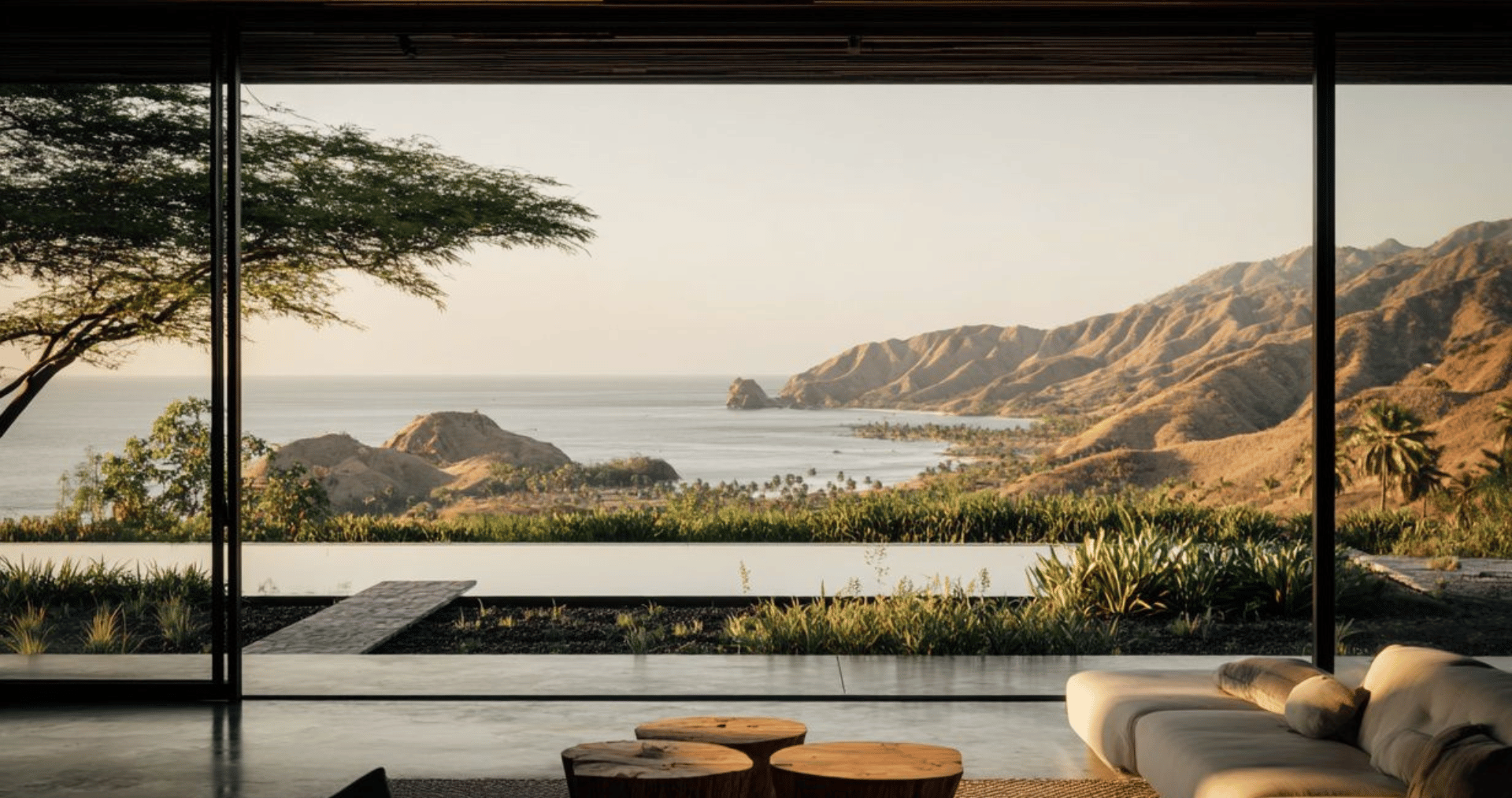
Pengantap, Sekotong, Belongas—these aren't Kuta. And that's the entire point.
The Old Money Aesthetic Meets New Money Capital
There's a generation coming into serious wealth right now—tech founders, crypto early-adopters, young family office managers—and they're explicitly rejecting the ostentatious displays of their predecessors.
They grew up online. They understand that true status is inverse to visibility.
.png)
But here's what makes this particularly interesting for Indonesian luxury property: their income is growing faster than any previous generation, and they're looking for investments that signal cultural capital, not just economic capital.
When they look at Lombok, they're not asking "Where is everything happening?"
They're asking: "Where can I be before everyone else figures it out?"
That's not Kuta anymore.
The Investment Thesis Hidden in Plain Sight
Legacy wealth has always understood something that new money is just learning: remoteness is a feature, not a bug.
When you control land in an underdeveloped but objectively beautiful location, you control the narrative. You determine who comes, how they come, and what the experience feels like. You can't do that in Kuta. The infrastructure is already built. The story is already written.
In Pengantap, the story hasn't been written yet.
And here's the mechanism that most investors miss: The property isn't just an asset. It's a signal.
The villa in the undiscovered location says: "I knew before you did. I have cultural capital you're still building." It's the real estate equivalent of owning the off-menu wine allocation.
Status Decoupling in Practice
The smartest luxury hospitality operators already understand this.
They protect the core experience—the actual stay, the actual access—for the discerning few. But they monetize awareness through secondary touchpoints. The merch line. The coffee table book. The social media presence that shows you that it exists without giving you access.
.png)
The same principle applies to real estate investment.
You don't need Kuta's foot traffic if you're building for the market that values not being in Kuta. You need the right 50 buyers, not 5,000 tourists.
Those 50 buyers will pay premiums that make the mass-market approach look quaint.
The Credibility Infrastructure
But here's the critical piece: You can't just buy remote land and call it exclusive.
Cultural capital requires credibility. That's architecture that understands context. That's sustainability that's structural, not performative. That's partnerships and design vocabulary that signal "we know what we're doing" to people who know what to look for.
This is why villa developments in remote Lombok locations need to be more sophisticated than Kuta properties, not less. The location itself provides the status signal—but only if the execution matches the promise.
When someone buys property in Pengantap, they're not buying despite the remoteness. They're buying because of it. But only if everything else communicates: "This was built by people who understand."
The Question Isn't Kuta vs. Pengantap
The real question is: What kind of investor are you positioning yourself as?

If you're optimizing for immediate rental yields from backpackers and mid-market tourists, Kuta makes sense.
But if you're building a portfolio that appreciates based on scarcity, cultural capital, and access to the next generation of luxury travelers—the ones who explicitly reject the obvious—then remote Lombok is exactly where you want to be.
Status isn't about price tags anymore.
It's about being in the know before the crowd arrives.
And the crowd? They're still in Kuta.
Eastern Edge identifies under-recognized luxury property opportunities in Indonesia for investors building cultural capital alongside financial returns. Our Lombok developments focus on locations that prioritize exclusivity over accessibility—because the investors we work with understand the difference.


%402x%20(dark).svg)
%402x%20(dark).svg)

%402x.svg)


