
%402x.svg)
Yes — foreign nationals can legally control and benefit from property in Indonesia, including in Bali and Lombok. What differs from many Western markets is the legal structure used to hold those rights.
Indonesia does not permit foreign individuals to directly hold freehold land titles (Hak Milik). Instead, international buyers access property through several well-established structures recognised under Indonesian law.
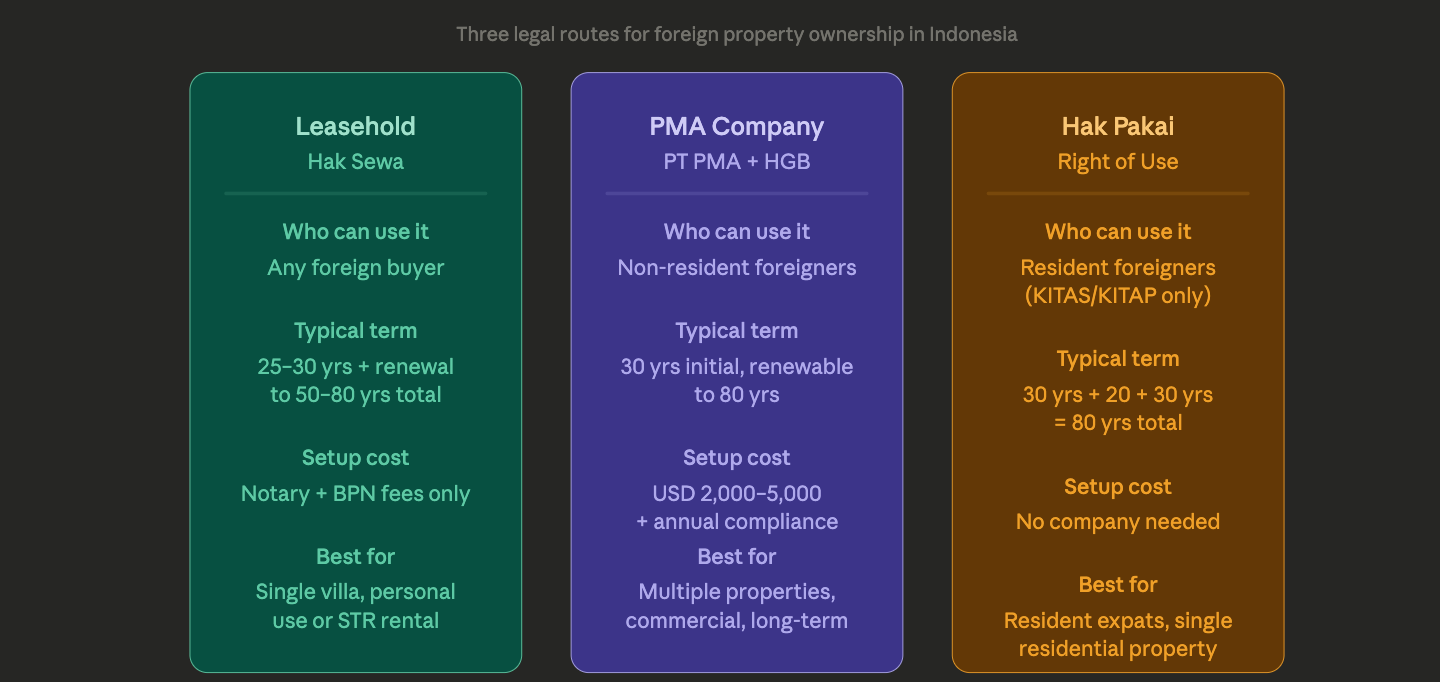
These structures Leasehold (Hak Sewa), Hak Pakai (Right of Use), and ownership through a PT PMA company using HGB title are widely used by foreign investors purchasing villas, residential properties, or development land.
Each structure carries different legal characteristics, time horizons, and setup costs. Understanding these distinctions is one of the most important steps before entering the Indonesian property market.
This guide explains how each ownership route works, what costs are typically involved, and which option tends to suit different buyer profiles.
The Three Legal Structures for Foreign Property Ownership
Foreign buyers typically access Indonesian property through three primary legal pathways.
Each structure suits different situations depending on whether the property is intended for personal use, long-term residence, rental income, or commercial development.
Leasehold Title (Hak Sewa)
Leasehold is the most widely used ownership structure for foreign buyers purchasing a villa or residential property in Bali or Lombok.
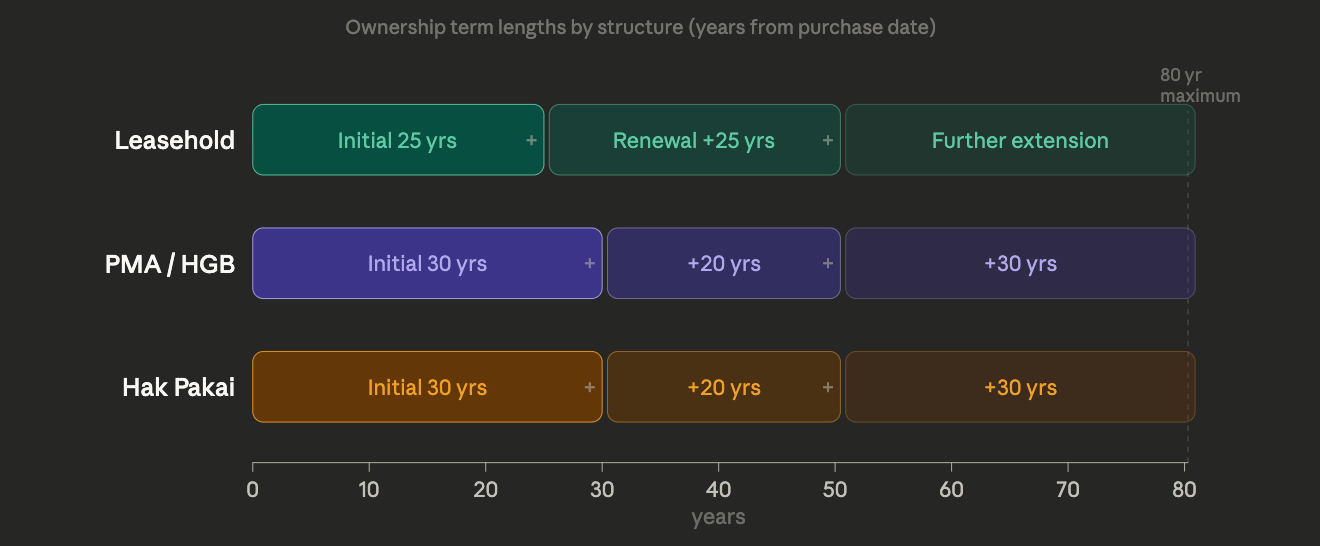
Under a leasehold agreement, the buyer obtains the right to use and occupy the property for a defined period of time. Most lease agreements begin with a 25 to 30-year term, with extension options often written into the contract.
When extensions are included, the effective control period can extend well beyond 50 years.
The underlying land title remains with an Indonesian owner, while the lease agreement typically notarised and registered protects the rights of the foreign buyer.
Leasehold structures are commonly used for:
- Private villas
- Holiday homes
- Short-term rental investments
Because leasehold involves relatively simple legal setup and minimal ongoing obligations, it remains the most accessible entry point for many international buyers.
Read More: Property Ownership Types in Indonesia: A Clear Guide for Foreign Buyers
Hak Pakai (Right of Use)
Hak Pakai provides foreigners with a state-recognised right to use property in Indonesia.
Unlike leasehold agreements, Hak Pakai titles are issued directly under Indonesian land law and are typically used by foreign residents holding KITAS or KITAP residency permits.
Hak Pakai titles generally follow this structure:
- Initial term: 30 years
- Extension: 20 years
- Further extension: 30 years
This creates a potential control horizon of up to 80 years.
Hak Pakai is commonly used by expatriates who intend to live in Indonesia long-term rather than operate property as a commercial investment.
Property Ownership Through a PT PMA Company
A PT PMA is a foreign-owned Indonesian company that allows international investors to legally operate businesses and hold property rights.
Under this structure, the company holds land under Hak Guna Bangunan (HGB) title, which grants the right to construct and own buildings on land for a defined period.
Typical HGB structures follow this timeline:
- Initial term: 30 years
- Extension: 20 years
- Renewal: 30 years
Like Hak Pakai, this structure can extend to roughly 80 years of operational control.
PT PMA structures are typically used for:
- Property development
- Hospitality businesses
- Multi-unit rental investments
- Commercial real estate
Because the structure involves company formation, compliance reporting, and administrative costs, it is generally more suitable for larger investment projects rather than single villas.
What Does It Cost to Acquire Property in Indonesia?
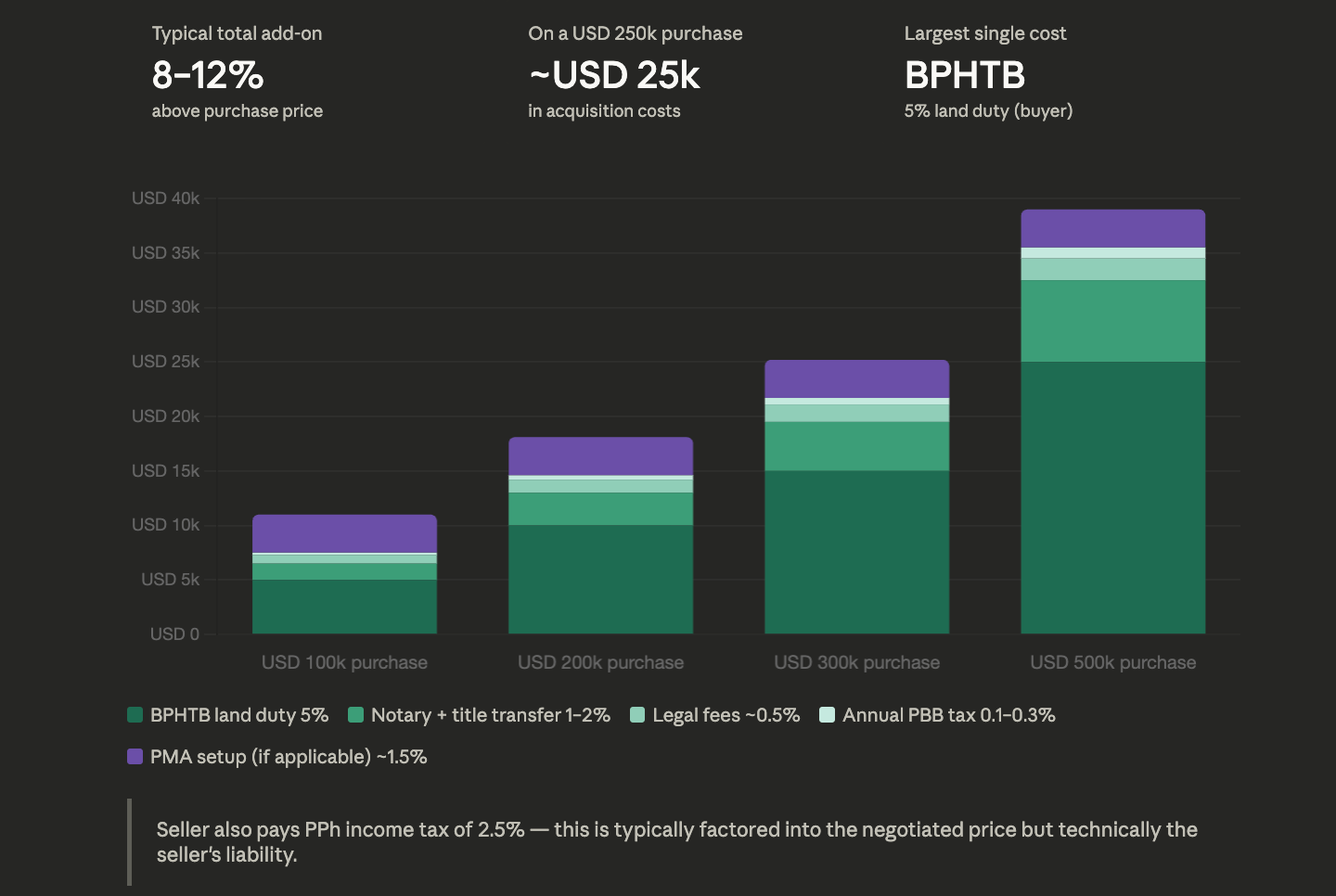
Beyond the purchase price, buyers should also consider acquisition costs associated with legal registration, taxes, and administrative procedures.
In most transactions, total acquisition costs typically fall within 8–12% of the purchase price.
The largest component is usually BPHTB land transfer tax, which accounts for approximately 5% of the transaction value.
Other costs may include:
- Notary and title transfer fees
- Legal review and due diligence
- Company setup costs (for PMA structures)
- Annual land tax (PBB)
Due Diligence Before Buying Property
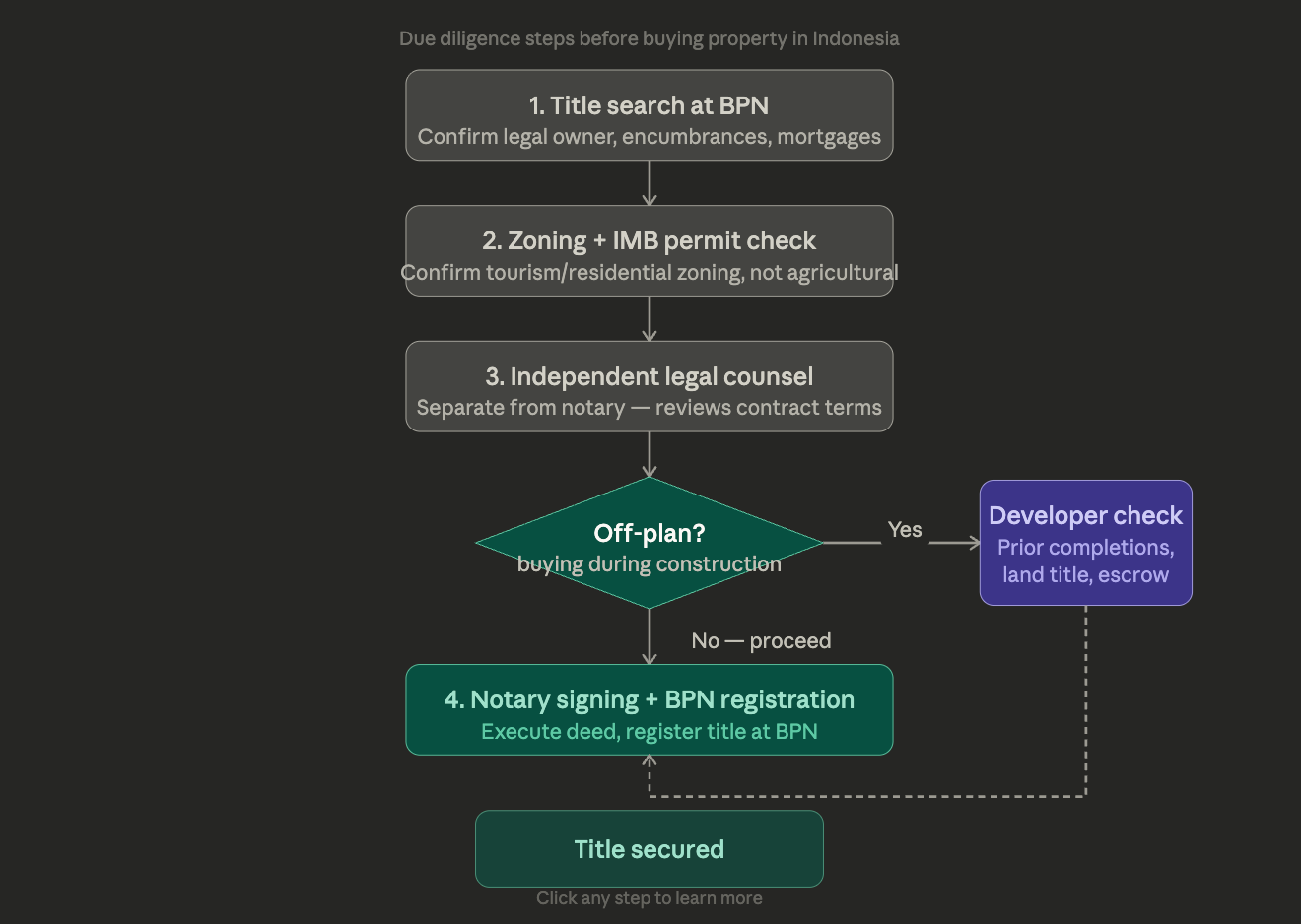
Regardless of the ownership structure chosen, proper due diligence remains essential when purchasing property in Indonesia.
A typical transaction process includes several verification steps designed to confirm that the land title, zoning, and contractual terms are legally sound.
These steps generally include:
- Title search at the National Land Agency (BPN)
- Zoning and permit verification
- Independent legal review of contracts
- Notary signing and title registration
For off-plan developments, additional verification may include reviewing a developer's previous projects and ensuring land titles are secured before construction begins.
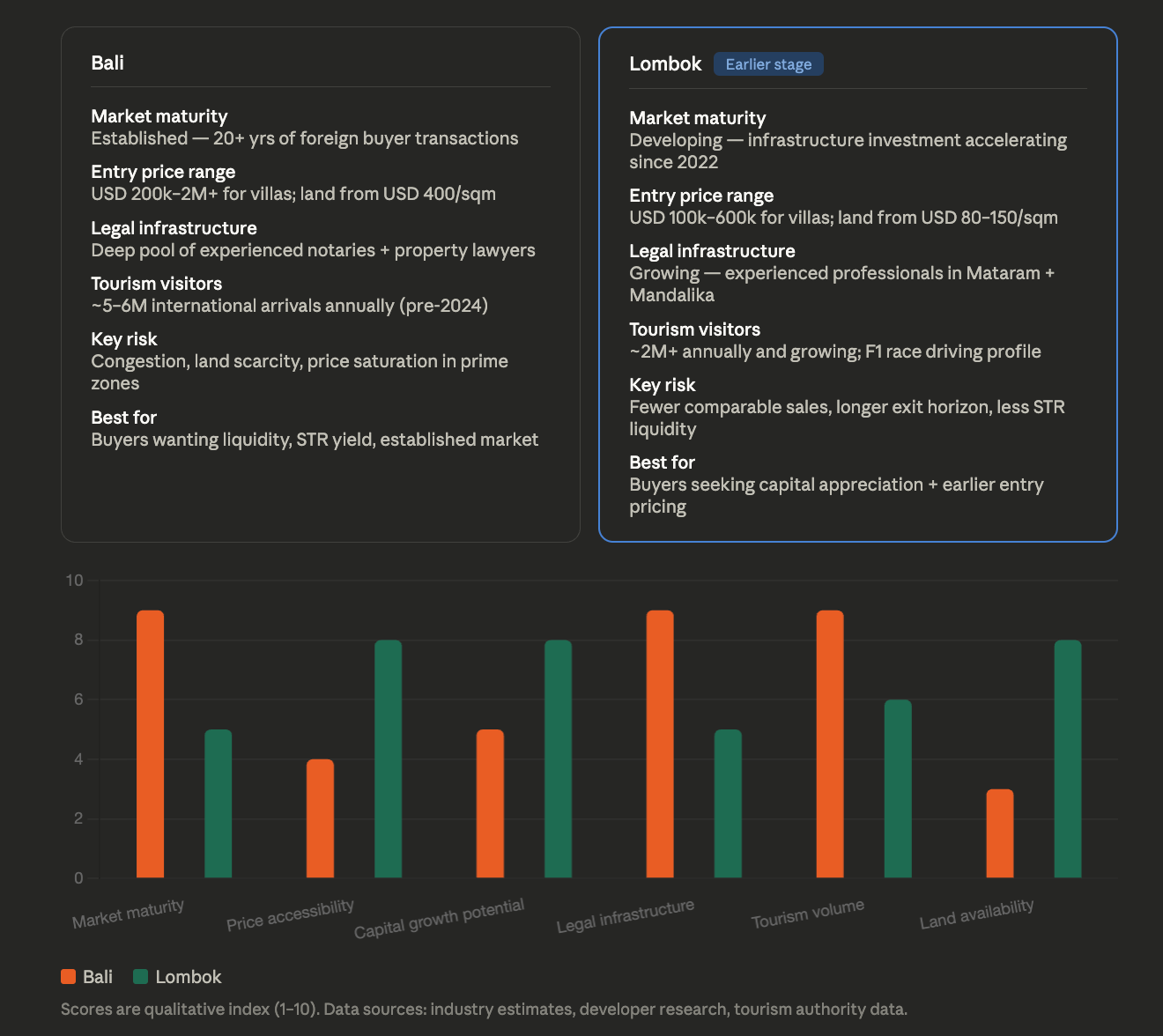
Bali vs Lombok: Market Maturity and Investment Timing
Although Bali remains Indonesia’s most established international property market, Lombok is increasingly attracting attention from investors seeking earlier entry points.
Bali’s market benefits from decades of tourism development, a large hospitality industry, and deep legal infrastructure. Lombok, by comparison, is still developing but has seen significant growth in infrastructure and international visibility over the past several years.
For many buyers, the distinction comes down to market maturity versus entry pricing and growth potential.
Choosing the Right Ownership Structure
There is no single ownership structure that suits every buyer.
The appropriate option depends on several factors:
- Whether the property is for personal residence or investment
- Whether the buyer holds Indonesian residency
- The intended time horizon of ownership
- Whether the property will operate as a business or private home
For many foreign buyers entering the Indonesian market for the first time, leasehold structures remain the most common pathway. Others may choose Hak Pakai for residential use or PT PMA structures for larger commercial ventures.
What matters most is ensuring the structure is established transparently and verified through proper legal review.
A Market That Continues to Attract International Buyers
Indonesia’s property market has evolved significantly over the past decade. Legal frameworks are better understood, professional advisors are more widely available, and foreign investment has become a familiar part of the landscape in destinations such as Bali and Lombok.
For international buyers, the opportunity lies not only in the destination itself but in approaching property ownership with the right knowledge from the outset.
Understanding how Indonesia’s ownership structures work is the first step toward doing exactly that.


%402x%20(dark).svg)
%402x%20(dark).svg)

%402x.svg)


