
%402x.svg)
Buying property in Indonesia through a PT PMA requires more than checking the land certificate.
If the transaction involves acquiring shares in an Indonesian company that owns or operates the property, the buyer should also confirm that the company has completed its annual shareholder reporting, updated its business activities under KBLI 2025, and maintained accurate records in the AHU and OSS systems.
These corporate checks became particularly important following two regulatory developments:
- New annual-report filing requirements under Ministry of Law Regulation No. 49 of 2025.
- The replacement of KBLI 2020 with KBLI 2025.
Neither reform changes the underlying land title automatically. However, both can affect whether a company is compliant, correctly licensed and ready to complete a transaction.

Read More: Mandala Terraces: A Different Way to Enter South Lombok
Can a PT PMA own property in Indonesia?
A PT PMA is an Indonesian limited liability company with foreign investment. As an Indonesian legal entity, it may qualify to hold certain Indonesian land rights, including Hak Guna Bangunan, commonly abbreviated as HGB.
Government Regulation No. 18 of 2021 provides that HGB may be held by Indonesian citizens and legal entities established under Indonesian law and domiciled in Indonesia. Eligibility remains subject to the company structure, investment rules, land status and intended business activity. Government Regulation No. 18 of 2021
This does not mean that a PT PMA can automatically purchase or operate every type of property.
Four separate questions must be answered:
- Is the company legally eligible to hold the relevant land right?
- Does its deed authorise the intended business activity?
- Does its KBLI and OSS profile match that activity?
- Does the property have the necessary spatial, building and operational approvals?
A land certificate answers the ownership question. It does not, by itself, prove that a villa, apartment, office, warehouse or development can legally be operated in the way the buyer intends.
Are you buying the property or the company?
Before reviewing RUPST and KBLI compliance, the buyer should identify the legal structure of the transaction.
Asset purchase
In an asset purchase, the buyer acquires the land right, building or other property asset from the current owner.
The buyer normally investigates:
- The land certificate and registered owner.
- Mortgages, seizures and other encumbrances.
- The remaining duration of the land right.
- Zoning and spatial conformity.
- Building approval and fitness-for-use documentation.
- Tax and transfer costs.
- The seller’s authority to dispose of the property.
Article 102 of Indonesia’s Company Law may require shareholder approval if a company transfers or encumbers assets representing more than 50% of its net assets in one transaction or a series of connected transactions. Law No. 40 of 2007 on Limited Liability Companies

Share acquisition
In a share acquisition, the buyer acquires the company that holds or operates the property.
The registered owner of the property does not change, but control of the company does. This may simplify one part of the transaction, but it also means the buyer inherits the company’s history.
That history can include:
- Corporate filing problems.
- Unpaid taxes.
- Incorrect shareholders or beneficial ownership records.
- Existing contracts and employee liabilities.
- Inaccurate business activities.
- Incomplete licences.
- Litigation and regulatory warnings.
RUPST and KBLI 2025 compliance are therefore particularly important when buying shares in a property-holding or operating company.
What is RUPST?
RUPST stands for Rapat Umum Pemegang Saham Tahunan, or annual general meeting of shareholders.
The annual RUPS was already mandatory under Indonesia’s Company Law before the 2025 regulatory changes. It must generally be held no later than six months after the end of the company’s financial year.
For a company whose financial year ended on 31 December 2025, the annual meeting should therefore have been held no later than 30 June 2026.
At the meeting, the shareholders consider and approve the company’s annual report, including its financial statements and the supervisory report of the board of commissioners.

What changed under Permenkum 49 of 2025?
Ministry of Law Regulation No. 49 of 2025 introduced a more formal electronic submission process for an ordinary Indonesian limited liability company.
The regulation requires:
- The directors to submit the annual report to the RUPS after review by the board of commissioners.
- The annual report to be approved by the RUPS.
- The approval to be recorded in a notarial deed.
- The directors, through a notary, to submit the deed and annual report electronically through the Legal Entity Administration System, or SABH.
- Submission to be completed within 30 calendar days after the approval deed is signed.
The required annual report includes:
- Comparative financial statements.
- Profit and loss statement.
- Cash flow statement.
- Statement of changes in equity.
- Notes to the financial statements.
- Company activities report.
- Social and environmental responsibility report.
- Material matters affecting the business.
- Commissioners’ supervisory report.
- Names of the directors and commissioners.
- Salary and allowance information for directors and commissioners.
The complete requirements appear in Article 16 of Ministry of Law Regulation No. 49 of 2025.
Why should a property buyer care about the RUPST?
A buyer acquiring shares in a property company should request evidence that the latest RUPST and annual-report submission were completed.
The relevant documents normally include:
- The annual report.
- The notarial deed recording its approval.
- Evidence of submission through SABH.
- The Ministry’s electronic receipt.
- Audited financial statements, where an audit is legally required.
- Evidence that no AHU warning or system block remains outstanding.
If a company fails to submit the annual report correctly, the Ministry may issue a written warning.
If the breach is not remedied within 30 days after notification, the company’s access to SABH may be blocked. The company can apply to remove the block after submitting the required documents.
An AHU block does not automatically cancel the company’s land title. Its practical significance is that it may prevent or delay corporate registrations.
This can affect:
- Registration of a share transfer.
- Changes to directors and commissioners.
- Amendments to the articles.
- Changes to the company’s purposes or business activities.
- Other corporate filings needed to complete or implement the acquisition.
For a buyer, unresolved annual-report compliance can therefore become a condition that must be remedied before closing.
What is KBLI 2025?
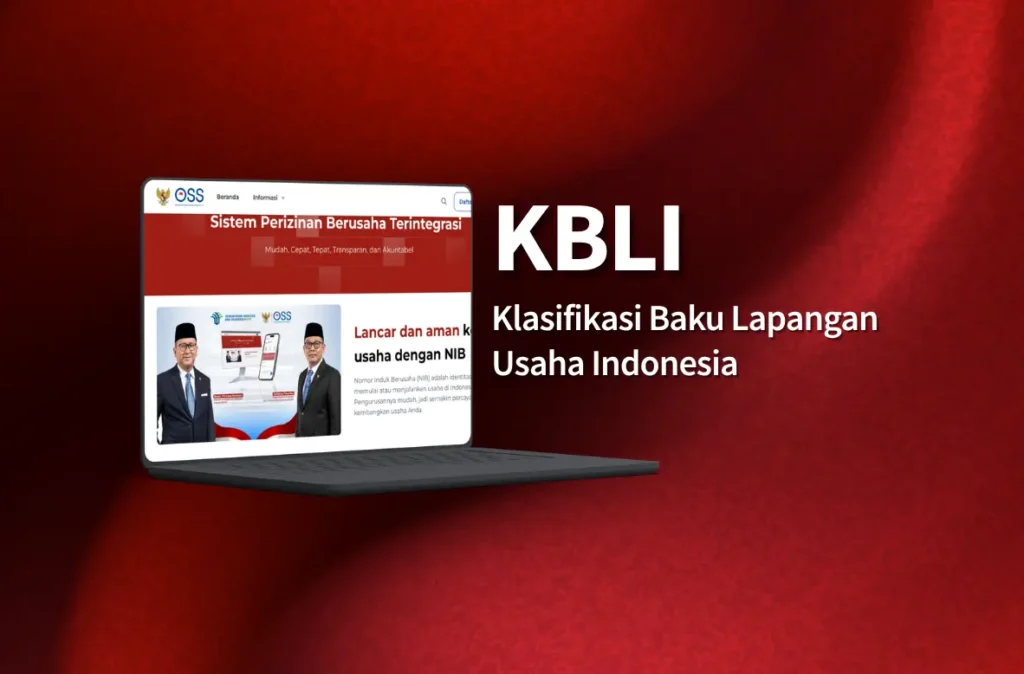
KBLI is Indonesia’s Standard Classification of Business Fields. It identifies the activities conducted by a business and is used in corporate administration, investment approvals and the OSS risk-based licensing system.
Statistics Indonesia Regulation No. 7 of 2025 introduced KBLI 2025 and revoked KBLI 2020. It became effective on 18 December 2025 and provided a six-month adjustment period. Statistics Indonesia Regulation No. 7 of 2025
Real estate activities are classified under Category M in KBLI 2025.
The change does not mean every existing PT PMA must obtain a new NIB or replace all its licences.
Government implementation guidance confirms that licences issued, verified or approved before KBLI 2025 generally remain valid. Statistics Indonesia’s implementation announcement
The important question is whether the conversion changes only the code or changes the substance of the company’s activities.
Does a KBLI 2025 update require a new deed?
Not always.
If the old activity converts to a new KBLI code without changing the substance of the company’s purposes, business scope or actual operations, the conversion may be completed automatically or through a system-assisted AHU and OSS process.
A deed amendment should not be required solely because the numerical code changed.
However, shareholder approval and a notarial amendment will normally be required if the company:
- Adds a new business activity.
- Expands the scope of an existing activity.
- Changes its corporate purposes.
- Moves into an activity not authorised by its current articles.
- Selects a new code with a materially different description.
When a substantive amendment is required, the company must coordinate the change across its deed, AHU record, NIB, OSS activity and relevant business licences.
Can the KBLI update be approved during the RUPST?
Yes, when an amendment is genuinely required.
The company can include a separate agenda item for amending its purposes or business activities at the same meeting used to approve the annual report.
The two decisions remain legally distinct:
- Annual-report approval is an ordinary annual RUPS matter.
- An amendment to the articles is subject to the higher quorum and voting rules applicable to articles amendments.
Under Article 88 of the Company Law, an articles-amendment meeting generally requires at least two thirds of voting shares to be present or represented, with approval from at least two thirds of votes cast, unless the company’s articles impose stricter requirements.
Combining the resolutions can reduce administrative duplication, but a company should not amend its deed unnecessarily if its KBLI conversion is genuinely non-substantive.
The KBLI 68111 problem
One of the most important KBLI 2025 issues for property companies concerns code 68111.
Under KBLI 2020, code 68111 carried the broad description “Real Estat Yang Dimiliki Sendiri Atau Disewa,” covering real estate owned or leased by the business.
Under KBLI 2025, the same number is used for “Aktivitas Pengembangan Bangunan dan Lahan Hunian,” or residential building and land development.
The number remains the same, but the scope has changed significantly.
The official OSS conversion result for 68111 illustrates why a buyer or company should not assume that an unchanged number means an unchanged activity.
Under the new classification:
- 68111 covers residential building and land development.
- 68112 covers leasing residential buildings and land owned or leased by the business.
- 68129 covers certain other non-residential real estate owned or leased.
- 68210 covers real estate intermediation.
- 68292 covers residential property management for a fee or under contract.
A company that previously used 68111 to rent completed villas or apartments should review whether that activity now belongs under 68112 or, if it is operating short-term accommodation, under Category 55.
Which KBLI applies to a rental villa?
The answer depends on how the villa is used.
Long-term leasing of residential property is different from operating short-term tourist accommodation.
Relevant KBLI 2025 examples include:
- 68112: Leasing residential buildings and land owned or leased by the business.
- 55203: Short-term villa accommodation.
- 55201: Homestay accommodation within an owner-occupied home.
- 55204: Apartment hotel accommodation.
- 55901: Third-party accommodation management services.
- 68292: Residential property management for another owner under a fee or contract.

The correct activity depends on facts including:
- Length of stay.
- Whether hospitality services are provided.
- Whether the owner or a third party operates the property.
- Whether the property is offered as accommodation or under a residential lease.
- The contracts used with guests, tenants and property owners.
- Applicable tourism and local licensing requirements.
Registering a real estate leasing code does not necessarily authorise a company to operate daily or weekly tourist accommodation.
Documents to request before buying a property company
A buyer considering the acquisition of a PT PMA or another Indonesian property company should request at least the following.
Corporate documents
- Current deed and articles of association.
- All amendments.
- Ministerial approvals and receipts.
- Current AHU company profile.
- Shareholder register.
- Directors and commissioners register.
- Beneficial ownership information.
RUPST documents
- Latest annual report.
- RUPST approval deed.
- SABH submission receipt.
- Evidence of any outstanding warning or AHU block.
- Audited financial statements where required.

KBLI and OSS documents
- Current NIB.
- Complete OSS business-activity profile.
- KBLI 2025 conversion record.
- Project locations.
- Risk classifications.
- Standard certificates.
- Business licences.
- Licences supporting business activities, known as PB-UMKU.
Property documents
- Land certificate.
- Official land-office search.
- Mortgage and encumbrance information.
- Remaining land-right duration.
- Spatial conformity or zoning documentation.
- Environmental approval.
- Building approval, or PBG.
- Certificate of proper function, or SLF.
- Tourism or accommodation licences where applicable.
Financial and investment documents
- Corporate tax returns.
- Tax payment and clearance information.
- LKPM investment reports.
- Investment and capitalisation records.
- Material contracts.
- Employee and vendor liabilities.
- Pending litigation or regulatory investigations.
The buyer should reconcile these records. The deed, AHU profile, OSS profile, NIB, licences and actual property use should tell the same story.
Warning signs for buyers
Further investigation is advisable if:
- The seller cannot provide the latest RUPST deed.
- No SABH annual-report receipt is available.
- The company’s AHU access is blocked.
- The shareholders shown in AHU do not match the transaction documents.
- The NIB still contains an old or inappropriate KBLI.
- KBLI 68111 was carried forward without reviewing its changed scope.
- A villa uses a real estate leasing code but operates as daily accommodation.
- The deed and OSS profile contain different activities.
- The property title is offered as proof that the business is licensed.
- The NIB is offered as proof that the company owns the land.
- The buyer is being asked to acquire shares without reviewing historical corporate and tax liabilities.
Frequently asked questions
Is RUPST mandatory for an Indonesian PT?
Yes. An ordinary Indonesian limited liability company must generally hold its annual RUPS within six months after the end of its financial year.
When must the annual report be submitted to AHU?
Under Permenkum 49/2025, the approved annual report and its notarial deed must be submitted through a notary within 30 calendar days after the deed is signed.
Does every company need to replace its licences because of KBLI 2025?
No. Existing licences issued, verified or approved before KBLI 2025 generally remain valid. The company must still ensure that its current activity is correctly converted and recorded.
Does a KBLI update always require a deed amendment?
No. A numerical conversion without a substantive change may be processed automatically. A substantive change in purposes, scope or activity generally requires shareholder approval and a notarial deed.
Can RUPST approval and a KBLI amendment happen at the same meeting?
Yes. They can be separate agenda items in the same meeting, provided the notice, quorum, voting and notarial requirements for each resolution are satisfied.
Does the correct KBLI prove that the company owns the property?
No. KBLI identifies the company’s declared business activity. Ownership must be verified through the land certificate and official land records.
Can an AHU block cancel the land title?
Permenkum 49/2025 does not state that an AHU block automatically cancels a land title. The block affects access to corporate administration and can prevent or delay corporate changes needed for a transaction.

Final considerations
When buying property in Indonesia through a PT PMA, the company and the property must both be investigated.
The land certificate, zoning, building approvals and operational licences determine whether the property can be held and used as intended. The deed, AHU records, RUPST filings, KBLI 2025 conversion and OSS licences determine whether the company is properly constituted and compliant.
A buyer acquiring shares in the company may inherit problems in either category.
Before signing or transferring funds, the buyer should have an Indonesian notary and qualified legal, tax and licensing advisers verify:
- The transaction structure.
- The company’s RUPST and AHU status.
- Its KBLI 2025 conversion.
- Its NIB and operational licences.
- The land title and encumbrances.
- The intended use of the property.
- Any remediation required before closing.
Correcting these matters before the acquisition is usually more controllable than discovering them after the buyer has taken ownership of the company.


%402x%20(dark).svg)
%402x%20(dark).svg)

%402x.svg)


